Connections / Characters
Why Do Villains Sometimes Become Our Favorite Characters?
What is it about the character we’re supposed to fear that makes us want to know more?
By Susan Ann Shepler · November 13, 2026 · 4 min read
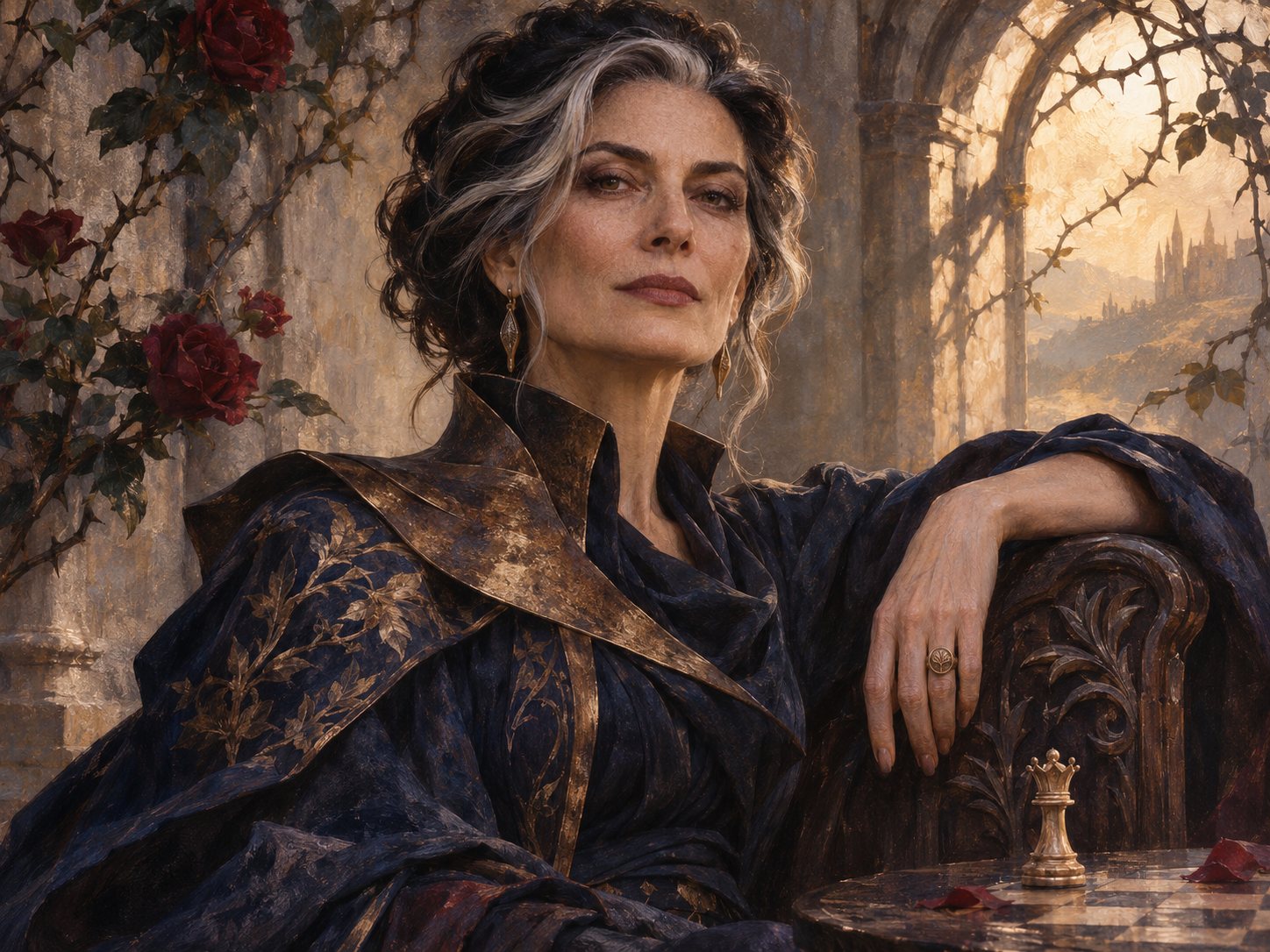
An imagined character. Illustration for AwakenArts.
Have you ever found yourself waiting for the villain to come back on screen? You want the hero to win, but the other character has your attention.
Maleficent is a good place to start. Perhaps you picture the figure from Disney’s Sleeping Beauty. Perhaps you think of Angelina Jolie in the later film. Both carry the same name, but they invite us into very different stories.
Read more ↓
Which raises the question: why do villains sometimes become our favorite characters?
Sometimes they have the best entrance
Think of a character who seems to change the room simply by arriving. Before anything happens, we are watching the face, listening to the voice, wondering what comes next.
Maleficent has that kind of presence. In Disney’s 1959 Sleeping Beauty, she curses Princess Aurora. Her character design, developed by Marc Davis, and Eleanor Audley’s voice give that threat a memorable form.
There is pleasure in watching a character so vividly made. We can admire the performance, the design, or a wonderfully delivered line while hoping the character’s plans fail.
“Favorite” is an interesting word here. It might mean the character we enjoy watching most. It does not necessarily mean the one whose company we would choose.
Then we want to know what happened
The 2014 Maleficent changes where we enter the story. It gives the fairy a history of betrayal and makes her the central figure.
That is more than adding a few details. We spend time with her before the actions we already know, and the story gives us different reasons to care about what happens to her.
We begin asking questions. What was lost? Why this revenge? Could she choose differently?
A motive gives us something to follow. It can make a character understandable without making every action acceptable.
A retelling can also change the character herself. The later Maleficent is a new interpretation, rather than a hidden explanation that we must read back into every earlier version.
What sort of villain are we looking at?
A ruler who cannot bear opposition. A deceiver who makes a dangerous offer sound reasonable. Someone who has been wronged and decides that everyone else must pay.
These are different ways a story can build its antagonist. Their desires matter: power, possession, revenge, recognition. So does what they are willing to do to get them.
This is where archetypes become interesting to me. We can notice a familiar pattern across very different characters while still asking what makes each one particular.
A queen’s clothes may suggest authority. A chess piece may suggest calculation. Neither tells us whether she is a villain. We discover that through her choices and what those choices cost other people.
Does a villain have to look frightening?
Look at the woman in the artwork accompanying this article. Her expression gives little away. Her hand rests easily beside a chess piece. She seems quite at home.
What would we think if we met her before hearing her story?
The image invites a possibility. It cannot settle her character for us. A beautiful face, a dark room, or an imposing costume can direct our expectations, but the story still has work to do.
Sometimes that gap—between the person we see and the intentions we have yet to discover—is what keeps us looking.
When wanting becomes consuming
Another question is how much is enough.
What happens when a character wants the crown, then obedience, then the removal of anyone who might challenge her? A desire becomes an appetite with no stopping place.
I explored consuming appetite in my visual poem, Devil. The repeated “He wants” reaches through seeds, stems, leaves, and the whole tree. The poem addresses spiritual evil; the fictional characters discussed here belong to their own stories. The connection is in that image of wanting everything.
See the poem, “Devil,” in the AwakenArts Collection →
Perhaps that is part of the fascination. A villain gives a desire a face, a voice, and consequences we can watch unfold.
We keep watching to find out what they will do next. And sometimes, even when we know the story, we want to see that entrance again.
Sources